
Meet the Signal Integrity Journal Editorial Advisory Board

Benoit Derat is Technical Advisor of Signal Integrity Journal. In this role, Benoit provides technical guidance and industry perspective to support the journal’s editorial mission and help strengthen its coverage of signal integrity, high-speed communications, measurement, and related technologies.
Eager to be part of the rapidly growing field of AI and data center technology, he took on a new challenge in 2025 as Senior Director of R&D for Computer Systems and Optical Transport Testing Solutions at VIAVI Solutions in Eningen, Germany. Benoit is an Edmond S. Gillepsie Fellow of the Antenna Measurement Techniques Association (AMTA) and a Distinguished Lecturer of the IEEE EMC Society (2024–2025). He has authored more than 100 scientific publications and holds over 45 patents, with his research centered on antenna systems and near- and far-field characterization techniques.
 Rula Bakleh is a highly skilled Principal Signal and Power Integrity engineer with extensive expertise in designing high-speed SerDes interfaces, parallel interfaces like memory, and RF/microwave systems. She excels in power integrity design and analysis for integrated circuit packages, circuit boards, and complex systems. Rula is known for her track record of achieving first-pass success in high-speed and high-power designs. She is an active member of DesignCon's Technical Program Committee and serves on the editorial advisory committee for the Signal Integrity Journal. Currently, Rula is contributing her expertise at AMD. Her prior experience includes significant roles at Graphcore in the U.K., Samtec-Teraspeed Consulting, Woodward-McCoach, L-3 Communications, BAE Systems, and Raytheon. Rula earned her Bachelor of Science in Electrical Engineering from SUNY Binghamton in 1997, followed by a Master of Science in Electrical Engineering with a focus on Microwave/RF Engineering from UMass Amherst in 2003.

Eric Bogatin is a Professor at the University of Colorado-Boulder in the ECEE dept. Additionally, he is a Fellow with Teledyne LeCroy. Eric improves the signal to noise ratio by sorting through all of the information available.
 Karen Burnham has worked in and around the aerospace, defense, automotive, and broader consulting world since 1996. She has a BS in Physics, an MS in Electrical Engineering, and a talent for translating EMC to English. She has managed requirements and test planning for NASA and the Dream Chaser spaceship, among others. She has done troubleshooting on electric vehicles for Ford Motor Company and other companies. She has initiated innovative SBIRs and STTRs through government centers and worked on classified programs. She has also consulted on projects across a wide swath of industries and sits on multiple international standards committees, landing her in her current role of Vice President of Standards for the IEEE EMC Society. Ms. Burnham founded EMC United, Inc. in 2024 to focus on helping companies and hardware designers solve EMC problems, ideally before they even start. She believes that, far from being black magic, EMC can be understandable (and even fun!), and she hopes to spread that passion more widely.
 Benjamin Dannan is a technical fellow and an experienced signal and power integrity design engineer, advancing high-performance ASIC and FPGA designs at Northrop Grumman. He is a Keysight ADS Certified Expert with expert-level proficiency in high-speed simulation solutions and multiple 3D EM solutions. He has expert-level proficiency with multiple test and measurement solutions, including oscilloscopes, vector network analyzers, time domain reflectometers, function generators, and EMC lab testing equipment.
Benjamin holds a certification in cybersecurity, has a BSEE from Purdue University, a Masters of Engineering in Electrical Engineering from The Pennsylvania State University, and graduated from the USAF Undergraduate Combat Systems Officer training school with an aeronautical rating.
Benjamin Dannan is a technical fellow and an experienced signal and power integrity design engineer, advancing high-performance ASIC and FPGA designs at Northrop Grumman. He is a Keysight ADS Certified Expert with expert-level proficiency in high-speed simulation solutions and multiple 3D EM solutions. He has expert-level proficiency with multiple test and measurement solutions, including oscilloscopes, vector network analyzers, time domain reflectometers, function generators, and EMC lab testing equipment.
Benjamin holds a certification in cybersecurity, has a BSEE from Purdue University, a Masters of Engineering in Electrical Engineering from The Pennsylvania State University, and graduated from the USAF Undergraduate Combat Systems Officer training school with an aeronautical rating.
 Joseph (Jay) Diepenbrock holds a Sc. B. (EE) from Brown University and an MSEE from Syracuse University. He worked in a number of development areas in IBM including IC, analog and RF circuit, and backplane design. He then moved to IBM’s Integrated Supply Chain, working on the electrical specification, testing, and modeling of connectors and cables and was IBM’s Subject Matter Expert on high speed cables. After a long career at IBM he left there and joined Lorom America as Senior Vice President, High Speed Engineering, and led the Lorom Signal Integrity team, supporting its high speed product development. He left Lorom in 2015, and is now an independent consultant. Jay has authored or co-authored a number of technical papers, and contributed to a number of industry standards, is a Senior Member of the IEEE, and holds 12 patents.
 Vladimir Dmitriev-Zdorov is a principal engineer at Mentor Graphics Corporation. He has developed a number of advanced models and novel simulation methods used in the company’s products. His current work includes development of efficient methods of circuit/system simulation in the time and frequency domains, transformation and analysis of multi-port systems, and statistical and time-domain analysis of SERDES links. He received Ph.D. and D.Sc. degrees (1986, 1998) based on his work on circuit and system simulation methods. The results have been published in numerous papers and conference proceedings.
 Jason J. Ellison received his Masters of Science in Electrical Engineering from Penn State University in December 2017. He is employed as a signal integrity engineer and develops high-speed interconnects, lab automation technology, and calibration technology. His interests are signal integrity, power integrity and embedded system design. He also writes technical publications for journals such as “The Signal Integrity Journal”. Mr. Ellison is an active IEEE member and a DesignCon technical program committee member.
 Barry Katz is a senior development manager at MathWorks. In his current role, Barry leads the teams responsible for products spanning RF (RF Toolbox and RF Blockset), Electromagnetic Modeling (Antenna Toolbox), Signal Integrity (SerDes Toolbox) and Analog Mixed Signal (Mixed-Signal Blockset). He also serves as president and CTO of Signal Integrity Software (SiSoft) where he continues to oversee the business and leads the team responsible for the Quantum Channel Designer and Quantum-SI product families. In 1993, Barry began his career at Digital Equipment Corporation as a senior software engineer where he developed signal integrity tools to support the design of the Alpha microprocessor. Then, in 1995, Barry founded SiSoft, a software and consulting services business. At SiSoft, Barry successfully launched multiple product lines, including Quantum Channel Designer, a DesignCon DesignVision award winner and Quantum-SI, a DesignCon DesignVision award finalist. Throughout his career, much of his focus has been devoted to providing signal integrity solutions to problems faced by high‑speed system designers. Barry has had a major influence on the signal integrity methodology utilized by numerous companies and has personally led multiple signal integrity design teams. He was the founding chairman of the IBIS Quality Committee. Barry holds an MSECE degree from Carnegie Mellon and a BSEE degree from the University of Florida.
 HeeSoo Lee is the High-Speed Digital Segment Lead for EDA Software at Keysight's Design Engineering Software division, based in Santa Rosa, Calif. He leads and manages the product management team responsible for high-speed digital EDA solutions. With over 35 years of experience in RF, microwave, and high-speed digital designs, he has held several key positions at Keysight, Agilent Technologies, and Hewlett-Packard, including Master EM Application Lead, Consulting Business Manager, Technical Marketing Lead, and Field Applications Engineer since 1989. Prior to these roles, he worked as an RF/MW Circuit Design Engineer at Daeryung Ind. Inc. He holds a BSEE from Hankuk Aviation University in South Korea.
 Dr. Cathy Ye Liu, distinguished Engineer, currently heads up Broadcom SerDes architecture and modeling group. Previously she worked as R&D director and distinguished engineer in Avago/LSI which acquired Broadcom in 2016. Since 2002, she has been working on high speed transceiver solutions. Previously she has developed read channel and mobile digital TV receiver solutions. Her technical interests are signal processing, FEC, and modeling in high-speed optical and electrical transceiver solutions. She has published many journal and conference papers and holds 20+ U.S. patents. Cathy has demonstrated her leadership roles in industry standard bodies and forums. Currently she serves as a member of the board director of Optical Internetworking Forum (OIF), a member of the board of advisors for the department of Electrical & Computer Engineering of University of California at Davis and the co-chair of the DesignCon technical track of high speed signal processing, equalization and coding. She received her B.S. degree in Electronic Engineering from Tsinghua University, China, and received her M.S. and Ph.D. degrees in Electrical Engineering from University of Hawaii.
 Alfred (Al) Neves, Founder and Chief Technologist at Wild River, has 30 years of experience designing and application development of semiconductor products, capitol equipment design focused on jitter and signal integrity analysis, and has successfully been involved with numerous business developments and startup activity for the last 13 years. Alfred is involved with the Signal Integrity community as a consultant, high-speed system level design manager and engineer. Recent technical accomplishments include development of platforms and methods to improve 3D electromagnetic correspondence to measure-based methods, including advancing time and frequency domain calibration methods. Alfred focuses on measure-based model development, package characterization, high-speed board design, low jitter design, analysis, and training. He earned a B.S. in Applied Mathematics at the University of Massachusetts.
 Istvan Novak is a Principle Signal and Power Integrity Engineer at Samtec, working on advanced signal and power integrity designs. Prior to 2018 he was a Distinguished Engineer at SUN Microsystems, later Oracle. He worked on new advanced power distribution design and validation methodologies. He was responsible for the power distribution and high-speed signal integrity designs of SUN's successful workgroup server families. He introduced the industry's first 25 um power-ground laminates for large rigid computer boards, and worked with component vendors to create a series of low-inductance and controlled-ESR bypass capacitors. He also served as SUN's representative on the Copper Cable and Connector Workgroup of InfiniBand, and was engaged in the methodologies, designs and characterization of power-distribution networks from silicon to DC-DC converters. He is a Life Fellow of the IEEE with twenty five patents to his name, author of two books on power integrity, teaches signal and power integrity courses, and maintains an SI/PI website.
 Prashant Pappu serves as a Principal Hardware Engineer at Amazon Web Services (AWS), where he plays a pivotal role in the system design of advanced machine learning platforms. Before his tenure at AWS, he accumulated valuable experience at Juniper Networks, where he focused on the development of full rack core routers. These routers are known for their intricate design and exceptional performance capabilities, making them among the most sophisticated products in the industry. He has filed more than five patents related to system design, and these patents are currently in the pending status. In his current position, Prashant is at the forefront of leading the development of next-generation machine learning platforms. His responsibilities encompass a wide range of critical areas, including the overall system design, power distribution throughout at the rack, server, just a bunch of graphics, and the design of Vcore rail for graphics processing units. Additionally, he is involved in thermal solution design considerations and is dedicated to driving the innovation of new architectures aimed at optimizing key factors such as power efficiency, performance, and cost-effectiveness.
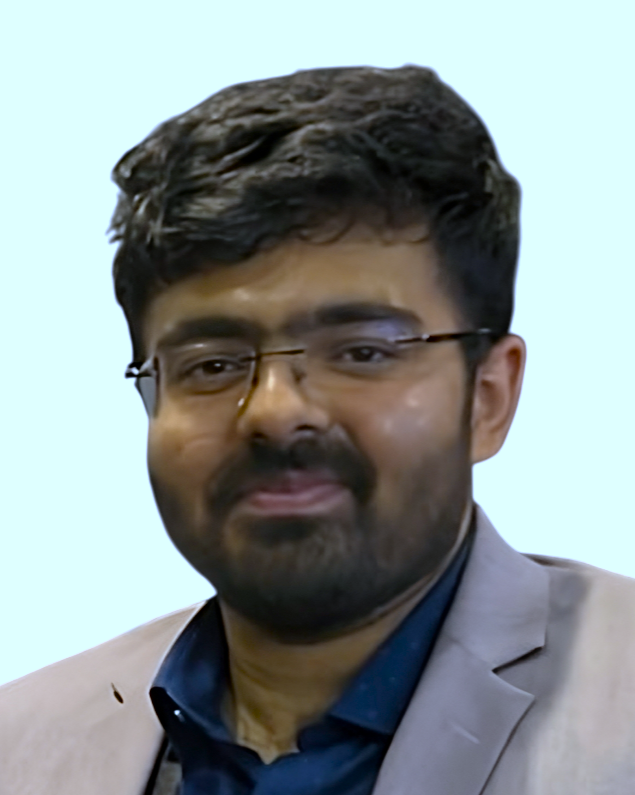 Aditya Rao is a senior engineer at Qualcomm San Diego in the Signal and Power Integrity Group. He received the B.S. degree in electrical and electronics engineering from Manipal University, Udupi, India, in 2019, and the M.S. (2021) and PhD (2024) degrees in electrical engineering from the University of Colorado Boulder, Boulder, CO, USA, with the High-Speed Digital Engineering Group. His work has focused on material characterization and SI-PI measurement-simulation correlation.
 C.J. Reddy is Vice President, Business Development-Electromagnetics for Americas at Altair. Dr. Reddy was awarded the Natural Sciences and Engineering Research Council of Canada Visiting Fellowship to work at Communications Research Center in Ottawa during 1991-1993 and was awarded the US National Research Council Resident Research Associateship in 1993 to work at NASA Langley Research Center in Hampton, Virginia. He also worked as Research Professor at Hampton University from 1995 to 2000. Dr. Reddy was the President of Applied EM, Inc from 2000 to 2017, where he led several Phase I and Phase II SBIR projects for the DoD and NASA. He was also the President of EM Software & Systems (U.S.) Inc from 2002 to 2014, and led the marketing of the EM Simulation tool, Feko in North America. EM Software & Systems (U.S.) Inc was acquired by Altair in 2014. Dr. Reddy is a Fellow of IEEE, Fellow of Applied Computational Electromagnetics Society (ACES) and a Fellow of Antenna Measurement Techniques Association (AMTA). Dr. Reddy is a co-author of the book, “Antenna Analysis and Design Using FEKO Electromagnetic Simulation Software,” published in June 2014 by SciTech Publishing (now part of IET). Dr. Reddy is elected as a member of AMTA Board of Directors for a three-year term starting January 2020 and served as the Technical Coordinator for AMTA 2020 and AMTA 2021 Conferences as well as the President in 2022 and served as the Past President of AMTA in 2023. Dr. Reddy served on the ACES Board of Directors. Dr. Reddy served as an Associate Editor for IEEE Open Journal of Antennas of Propagation, IEEE Transactions on Antennas and Propagation, and IEEE Antennas and Propagation Magazine. He also served as the Chair of IEEE Antennas and Propagation Society (AP-S) Young Professionals Committee from 2021 to 2024. Dr. Reddy served on the IEEE Fellows Committee for the terms of 2020 to 2021 and 2022 to 2023. He is currently serving as the President-Elect of IEEE Antennas and Propagation Society. Dr. Reddy is inducted into IEEE Heritage Circle by the IEEE Foundation for establishing the "IEEE AP-S CJ Reddy Travel Grant for Graduate Students."
Steve Sandler has been involved with power system engineering for nearly 40 years. Steve is the founder of PICOTEST.com, a company specializing in power integrity solutions including measurement products, services, and training. He frequently lectures and leads workshops internationally on the topics of power, PDN, and distributed systems and is a Keysight certified expert for EDA software. He frequently writes articles and books related to power supply and PDN performance and his latest book, Power Integrity: Measuring, Optimizing and Troubleshooting Power-Related Parameters in Electronics Systems, was published by McGraw-Hill in 2014.
 Yuriy Shlepnev is a member of the Signal Integrity Journal Editorial Advisory Board & President and Founder of Simberian Inc., where he develops Simbeor electromagnetic signal integrity software. He received M.S. degree in radio engineering from Novosibirsk State Technical University in 1983, and the Ph.D. degree in computational electromagnetics from Siberian State University of Telecommunications and Informatics in 1990. He was principal developer of electromagnetic simulator for Eagleware Corporation and leading developer of electromagnetic software for simulation of signal and power distribution networks at Mentor Graphics. The results of his research are published in multiple papers and conference proceedings.
 Lambert (Bert) Simonovich graduated from Mohawk College of Applied Arts and Technology, Hamilton, Ontario Canada, as an Electronic Engineering Technologist. Over a 32-year career, working at Bell Northern Research/Nortel in Ottawa Canada, he helped pioneer several advanced technology solutions into products. He has held a variety of engineering, research and development positions, eventually specializing in high-speed signal integrity and backplane design. After leaving Nortel in 2009, he founded Lamsim Enterprises Inc., where he continues to provide innovative signal integrity and backplane solutions as a consultant. He has authored several publications and holder of two U.S. patents. In addition to being a senior member of IEEE, he currently serves as a member of DesignCon's Technical Program Committee, EDICon's Technical Advisory Committee and Signal Integrity Journal's Editorial Advisory Board. His current research interests include high-speed signal integrity, modeling and characterization of high-speed serial link architectures. His most notable modeling achievement is the development of the "Cannonball-Huray" conductor roughness model used in several electronic design automation (EDA) software tools.
 Larry Smith is a Principal Signal Integrity engineer at Micron specializing in Power Integrity since August 2018. Prior to joining Micron, he was a PI engineer at Qualcomm in the mobile computing space beginning in 2011. He worked at Altera from 2005 to 2011 and Sun Microsystems from 1996 to 2005, where he did development work in the field of signal and power integrity. Before this, he worked at IBM in the areas of reliability, characterization, failure analysis, power supply and analog circuit design, packaging, and signal integrity. Mr. Smith received the BSEE degree from Rose-Hulman Institute of Technology and the MS degree in material science from the University of Vermont. He has more than a dozen patents and has authored numerous journal and conference papers. His most recent work is a book entitled “Principles of Power Integrity for PDN Design” published by Prentice Hall in 2017 with Dr Eric Bogatin.