Power integrity engineers are running into a new reality: most modern voltage regulator modules (VRMs) control loops are no longer linear, time‑invariant systems, and the old “break the loop and run a Bode plot” workflow does not tell the whole story anymore. Keysight’s ADS offers a complete approach by letting you simulate the entire power‑delivery path end‑to‑end — from the VRM and PCB to the decoupling network and all the way into the ASIC. With the Sandler State‑Space Average Model at the core, ADS becomes a practical environment for closed‑loop stability assessment that reflects how today’s converters actually behave.
Two measurement‑driven methods fall naturally into this workflow. Non‑invasive stability measurement (NISM) provides a frequency‑domain view of stability directly from output‑impedance data, while scope embedded power integrity analysis (SEPIA) turns step‑load responses into a time‑domain stability model you can drop straight into ADS. Both approaches deliver quantitative stability metrics without breaking the loop, and both work cleanly with non‑LTI systems. Bode plots are still available in ADS for traditional analysis, but they don’t apply to most modern VRMs. These newer methods give engineers a realistic, simulation, and measurement-ready way to evaluate and optimize stability across the full power distribution network (PDN).
Control loop stability has always been of interest in power electronics because the control loop ultimately determines the circuit’s end performance. Poor stability shows up immediately as elevated noise. Steve Sandler first presented on this topic at CMSE 2011, where he showed the relationship between stability and a power supply’s closed‑loop functions. He continued presenting on this in the years that followed, including his APEC 2012 paper presentation titled, “High-Fidelity Power Supply Measurement.” A key takeaway from that paper was that all closed-loop performance is affected by control loop stability, as summarized on slide four of that presentation, see in Figure 1.
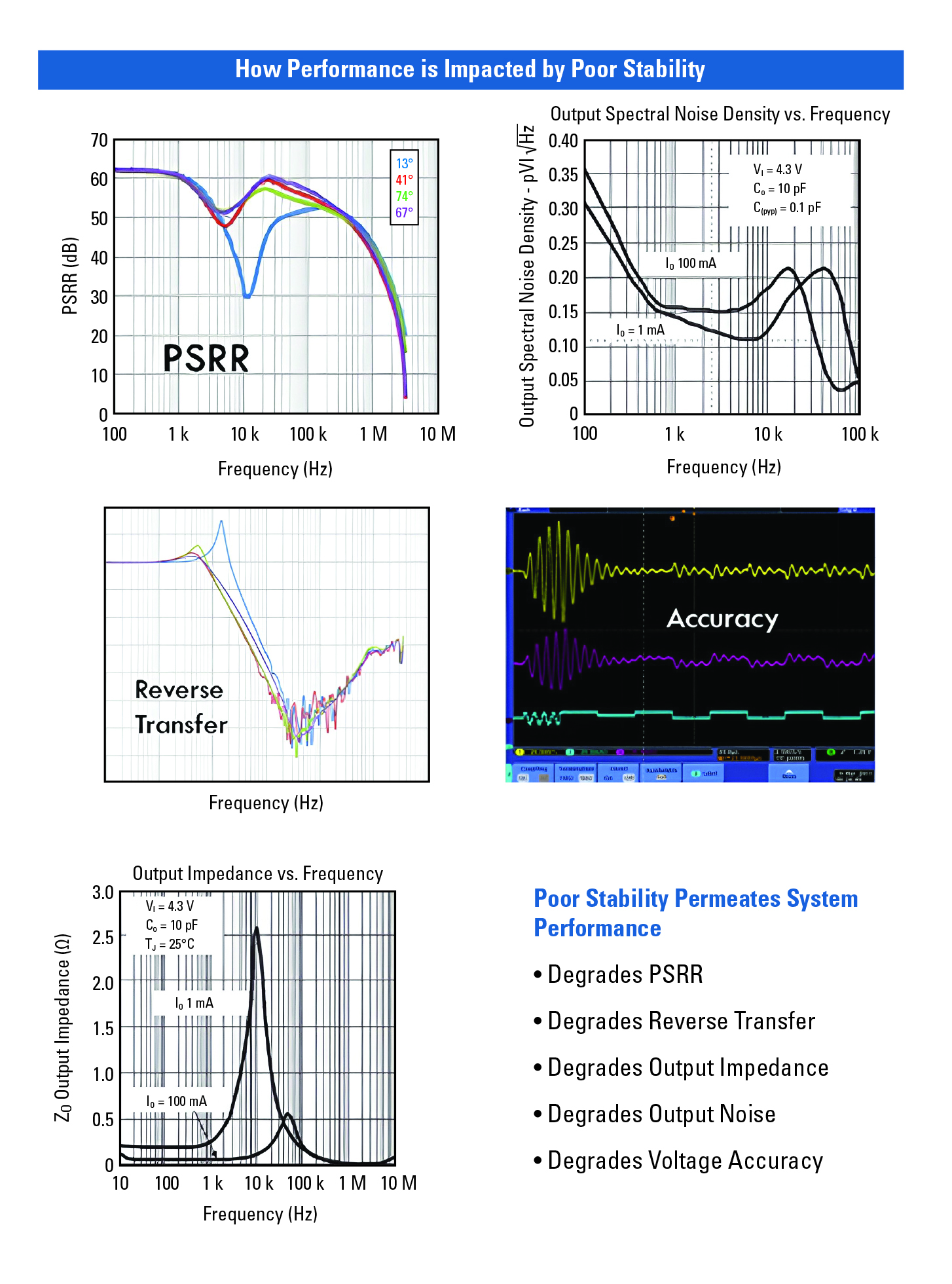
Fig 1. A summary of all closed-loop power supply performance metrics and how they are impacted by control loop stability.1
We do not always have the option of traditional Bode plot measurements, since in many cases open‑loop Bode plots are simply not possible. Voltage references and three‑terminal regulators do not expose the feedback loop. Op‑amps and RF amplifiers have bandwidths too high for practical signal injection. PMICs make this even more challenging by integrating multiple regulators into a single chip, with only the outputs available.
To overcome these limitations, Steve Sandler developed a closed‑loop stability tool, NISM, which mathematically relates the measured output impedance to the stability of the control loop. NISM provided a simple, quantitative assessment of stability without access to the loop. Adoption was slow at first as engineers were comfortable with Bode plots, and NISM did not always agree with traditional phase‑margin/gain‑margin results. Sandler repeatedly showed that NISM was correct and that the Bode plot, limited to phase and gain margins, does not always indicate relative stability. Engineers seemed to know this already: after running a Bode plot, they would generally check the step‑load response. If the step load was the trusted truth, why not just use that in the first place?
That led Sandler to develop SEPIA in 2013, which extracts quantitative stability directly from the step‑load response. Engineers trusted step loads, SEPIA agreed with NISM, and both methods worked non‑invasively. Still, adoption took time. It was not until the last few years — when measurement access became even more limited, noise limits tightened, dynamic currents increased, and VRMs shifted to non-linear, time‑variant control schemes — that interest accelerated. Suddenly, the industry needed methods that do not rely on assumptions of linearity or access to the control loop.
Simulation has always been part of the workflow, and this is where the Sandler State‑Space Average Model fits in. First published in 1995 and updated several times since, it provides a practical way to simulate closed‑loop behavior, including large‑signal effects, EMI, and other real‑world behaviors. Integrating NISM and SEPIA into Keysight ADS was the obvious next step. Ben Dannan and Heidi Barnes played a major role in getting these methods into ADS, and Masashi Nogawa — through his publications and continued advocacy — has been instrumental in driving renewed interest and adoption. These methods are now becoming even more accessible as they are integrated directly into measurement instruments. NISM has been available in the OMICRON Lab Bode Suite since 2012 and is now supported in a range of oscilloscopes, VNAs, and simulators. SEPIA is now being integrated into oscilloscopes as well. The introduction of Picotest high-speed step loads allows clean, high-bandwidth data to be acquired, furthering the benefits of SEPIA.
This article demonstrates a rigorous simulation-based approach to power integrity within Keysight ADS. We explore why traditional stability metrics often fail to capture the complexities of modern VRMs, particularly in non-linear or time-varying scenarios. By leveraging NISM and SEPIA directly within the ADS environment, designers can achieve a more realistic and accurate view of system stability. This unified simulation workflow ensures that the virtual model reflects the true behavioral dynamics of modern converters — principles that translate directly from the digital workspace to physical hardware validation.
What Can We Get from the Step Response?
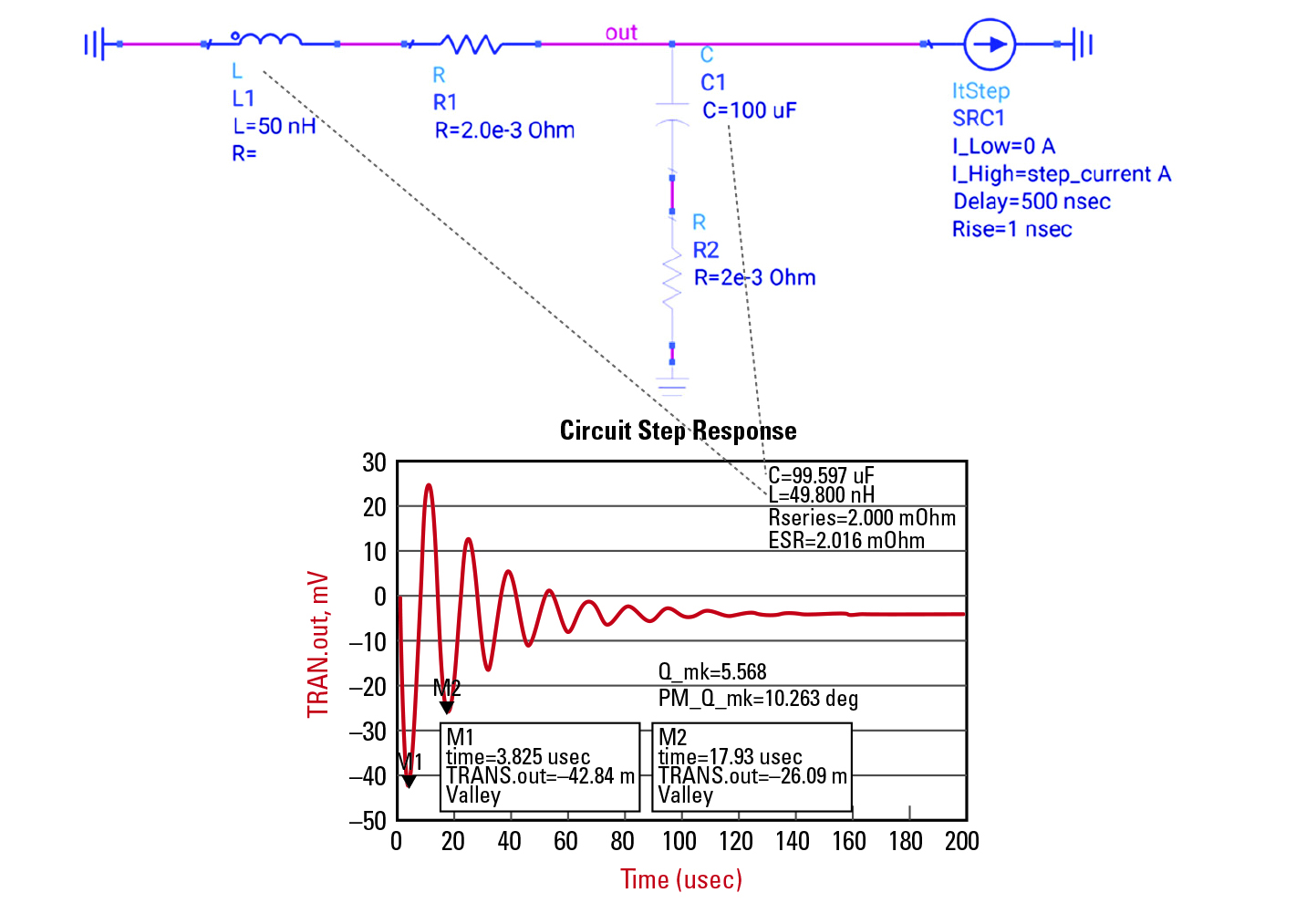
Before we dive into the mechanics of SEPIA, let’s revisit the fundamentals. Consider a standard PDN model shown in Figure 2: if you were to apply a single step response, whether in a simulation or on a physical circuit, what data could you actually extract from this step response?
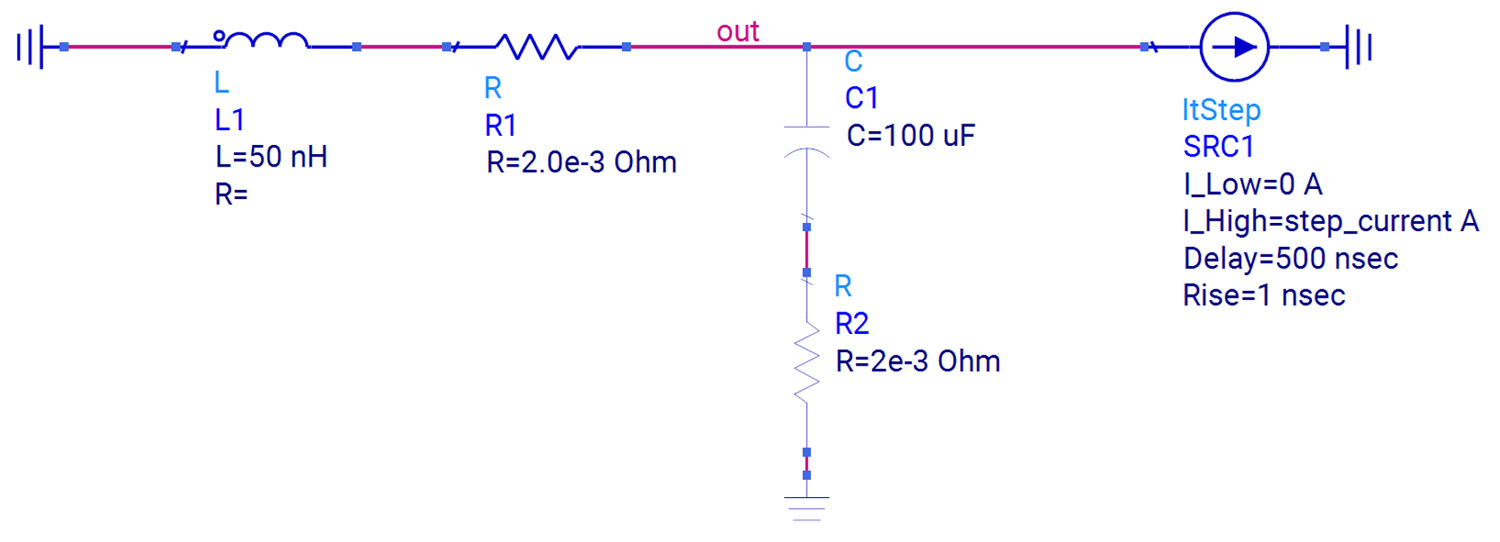
Fig 2. Simple PDN with a step response.
Most engineers would expect a basic look at transient behavior. But what if a single step response could reveal the entire DNA of your circuit? Imagine extracting every individual component value, alongside the loaded Q, phase margin, output impedance, and both natural and forced resonance frequencies. Furthermore, what if that same measurement told you exactly how to fix the design? SEPIA makes this possible, turning a simple voltage measurement into a complete diagnostic roadmap.
By utilizing the built-in SEPIA functions within Keysight ADS, we can transform a standard time-domain transient waveform into a wealth of design data. By simply placing two markers on the waveform, SEPIA extracts a complete, high-fidelity SPICE model of the circuit.
This goes far beyond basic visualization; it allows us to instantly determine the quality factor (Q) and phase margin — the two most critical metrics for assessing stability (see Figure 3). Whether you are validating a physical board on an oscilloscope or iterating in simulation, SEPIA provides the automated support necessary to optimize your PDN and ensure your design meets its target impedance goals in under a minute.
Fig 3. Simple PDN with a Step Response showing SEPIA.
What is SEPIA?
Developed by Steve Sandler of Picotest, SEPIA is a sophisticated tool designed to simplify power integrity design, analysis, and simulation. It allows engineers to extract a high-fidelity electrical SPICE model of a power supply’s output impedance from a simple voltage measurement, making it highly effective for both LTI and non-LTI systems.
By accurately determining critical parameters, including loaded Q, phase margin, capacitance, excess inductance, and both natural and forced resonance frequencies, SEPIA provides a comprehensive view of system behavior. It specifically uses Q and phase margin to assess stability performance, and it can suggest the minimum adjustments required to achieve a stable solution or identify the ideal capacitor values needed to meet a specific target impedance.
Key Capabilities of SEPIA
Stability Metrics: Directly calculates phase margin and Q to ensure power supply reliability.
Modeling: Converts physical measurements into actionable SPICE models.
Optimization: Recommends specific capacitor solutions to hit your “Target Impedance” goals.
Versatility: Functions across various system types, even those that are non-linear or time-varying.
SEPIA Simulation Comparison to NISM Using State-Space Average Models
To validate the accuracy of our stability metrics, we transition from theory to a practical simulation using a Sandler State-Space Average VRM model of the LTM4637 in Keysight ADS. This setup allows us to directly compare results from NISM and SEPIA to observe how each handles the same circuit dynamics.
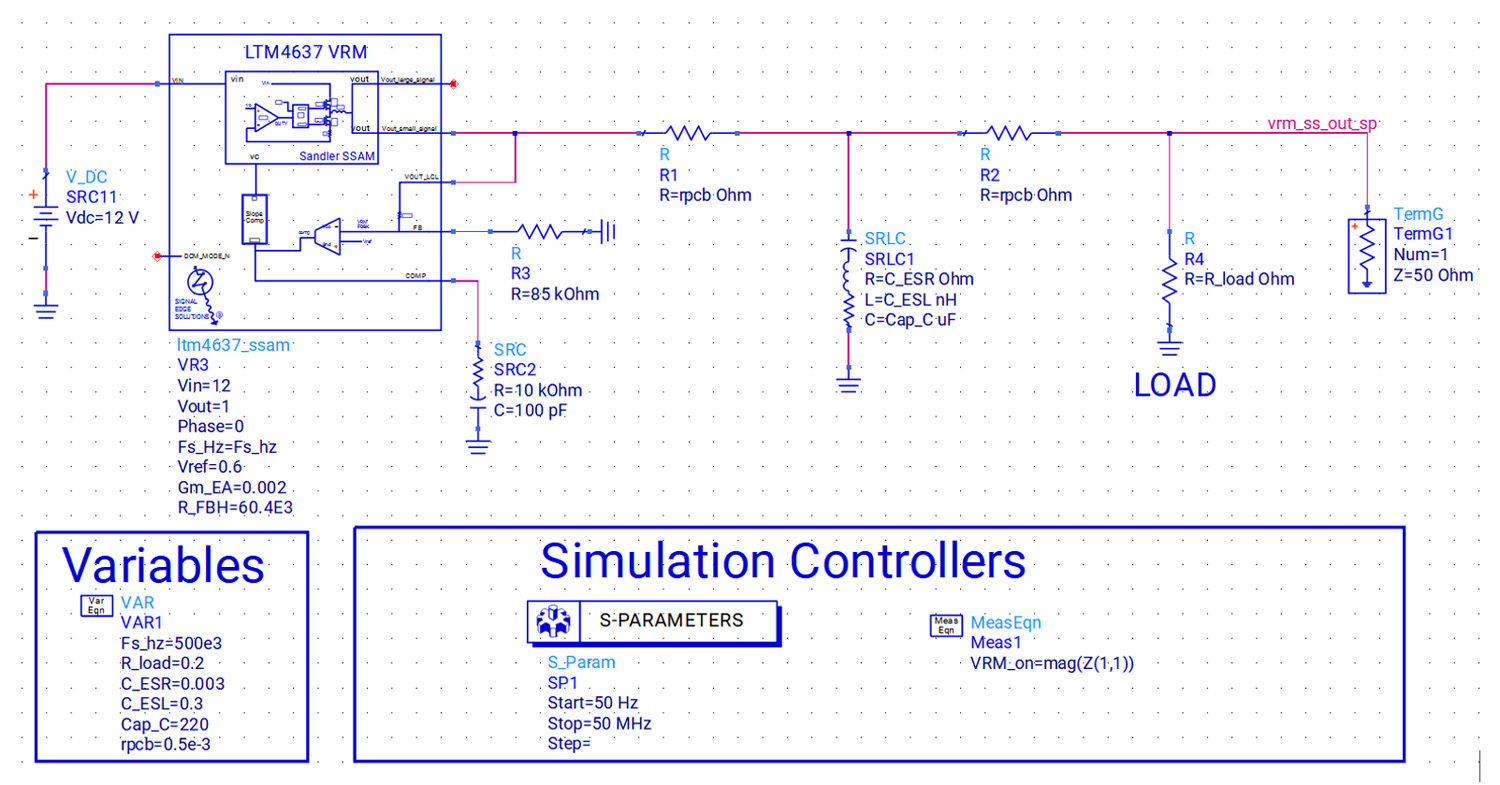
The test circuits (shown in Figures 4 and 5) convert a 12 V input to a 1 V output, with R3 setting the output voltage and SRC2 providing control loop compensation. To simulate a realistic environment, we’ve included SRLC1, a lumped-capacitor model representing the PDN, and R1 and R2 to account for some PCB copper resistance. By applying a transient step response, we can now evaluate the SEPIA extraction against the NISM baseline to verify the precision of our phase margin and Q factor calculations.
Fig 4. LTM4637 stability frequency domain simulation example using NISM in ADS.
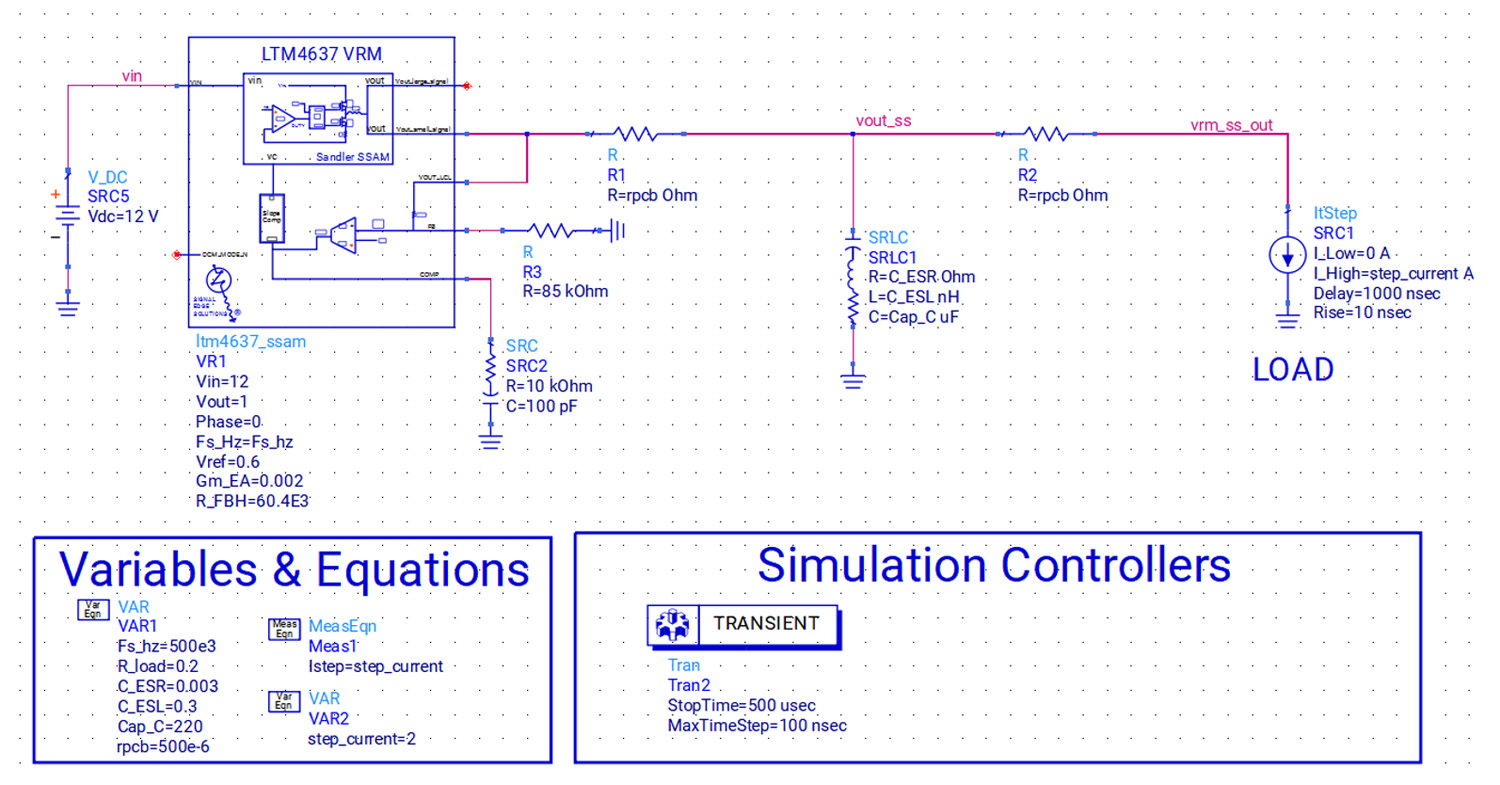 Fig 5. LTM4637 stability time domain simulation example using SEPIA in ADS.
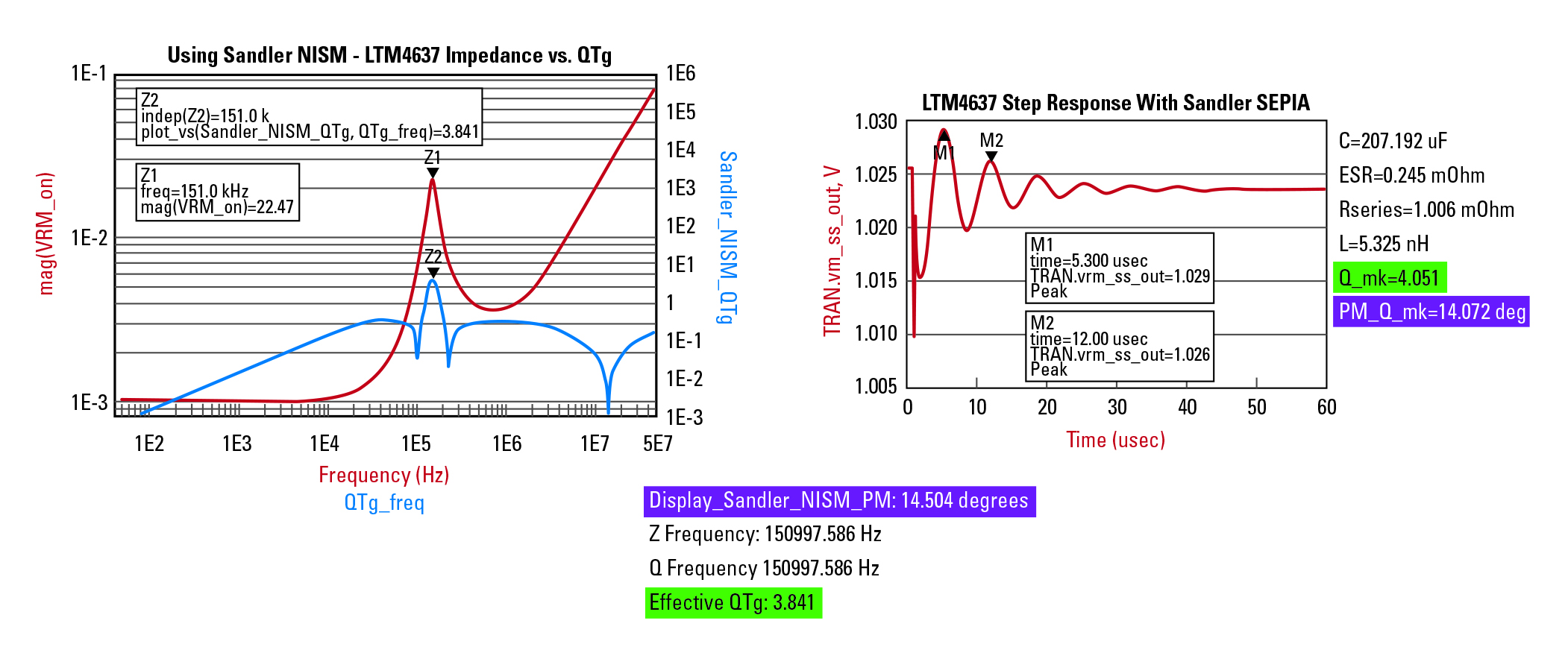
Figure 6 shows the NISM results on the left and the SEPIA results on the right. If we compare the two results highlighted in green, we see that NISM calculated Q = 3.841, whereas SEPIA calculated Q = 4.051, or basically the same answer. Additionally, when we compare the phase margin results highlighted in purple, we see NISM calculated PM = 14.504 degrees, and SEPIA calculated PM = 14.072 degrees, or again, the same answer. This is very powerful because we have shown two different methods that correlated across the frequency and time domains. Additionally, this validates our SEPIA result.
Fig 6. LTM4637 stability simulation results - NISM (left) vs. SEPIA (right).
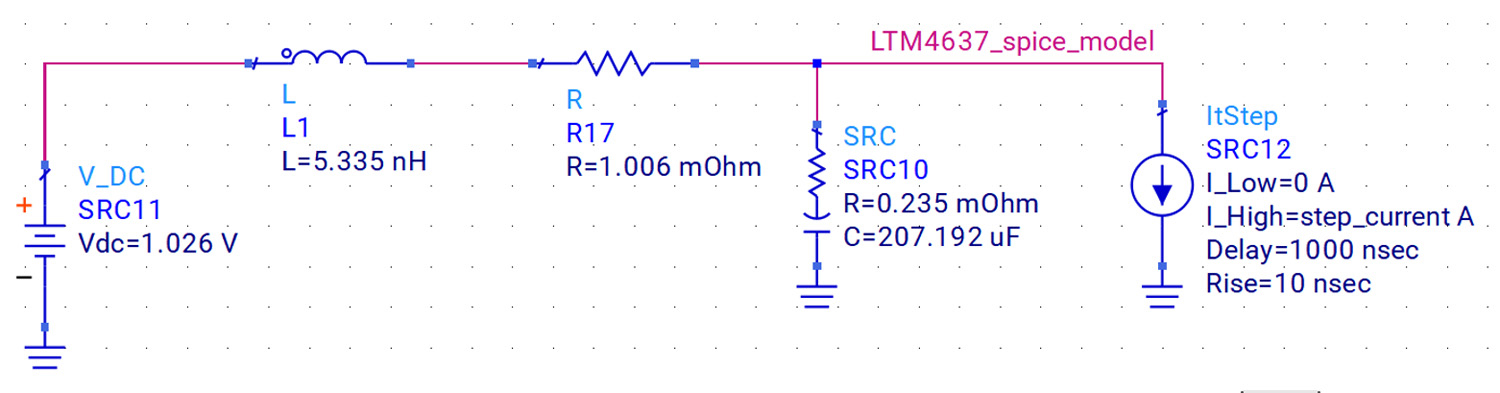
Beyond providing stability metrics, SEPIA successfully extracted a complete, high-fidelity SPICE model from the transient data. The extracted parameters — capacitance (207.192 µF), ESR (0.245 mΩ), inductance (5.325 nH), and series resistance (1.006 mΩ) — allow us to reconstruct the physical PDN with surgical precision.
As shown in Figure 7, we can generate a passive SPICE model using these values and re-run the time-domain simulation for validation. The comparison in Figure 8 is striking: the step response of the original LTM4637 Sandler State-Space Average VRM model is virtually identical to the response of our extracted SEPIA model.
Fig 7. Simulation setup for extracted SPICE model for LTM4637 PDN.
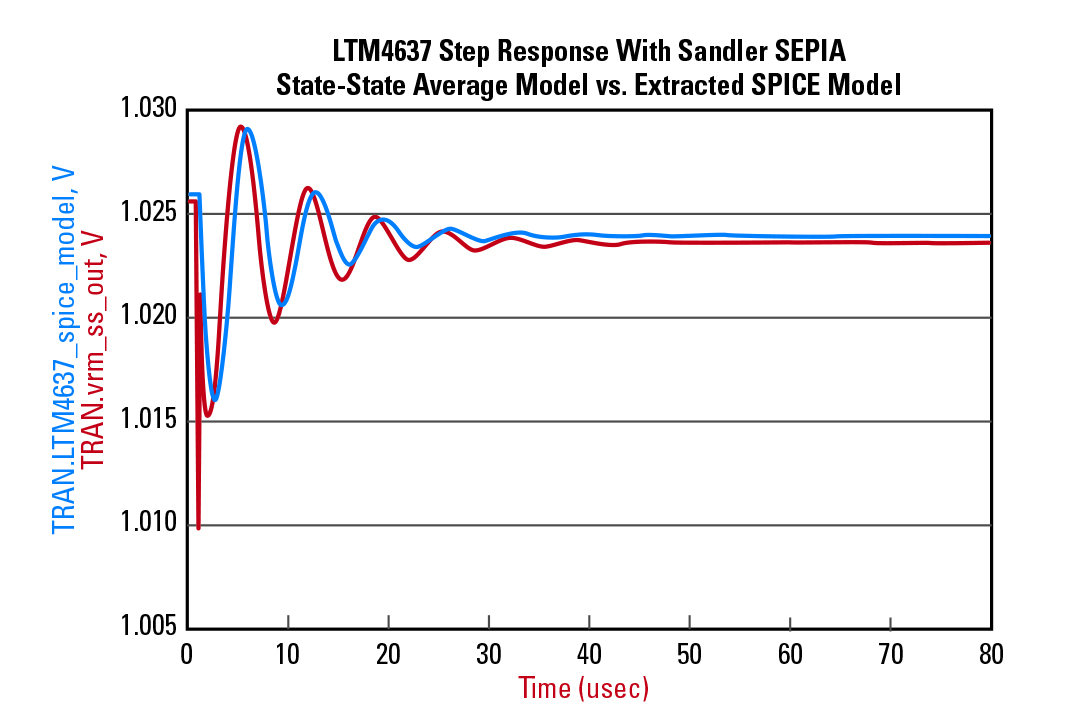 Fig 8. Simulation result for LTM4637 state-space VRM model vs. extracted SPICE model for LTM4637 PDN using SEPIA.
Conclusion
SEPIA represents a paradigm shift in power integrity by bridging the gap between measurement and simulation. Unlike traditional Bode plots, SEPIA excels where others fail — providing accurate stability metrics like phase margin and loaded Q for both LTI and non-LTI systems. By allowing engineers to extract a SPICE model from a simple voltage measurement, it facilitates a “design-by-analysis” approach that ensures the PDN remains stable and optimized.
Key Takeaways for Power Integrity Success
The Golden Rule: Always remember that noise follows impedance. To manage noise, you must manage your impedance profile.
Design Strategy: Utilize SEPIA or NISM to aim for a flat impedance PDN. If a flat response is not achievable, ensure the system is designed so that Q < 2 to maintain stability.
Comprehensive Modeling: Power integrity spans from the power supply to the load; achieving accuracy requires end-to-end modeling in ADS and validation through both large-signal and small-signal simulations.
Efficiency: When paired with StepLoad Pro on a scope, SEPIA transforms complex characterization into a 60-second automated reality, offering a ubiquitous solution across the entire design cycle.
Ultimately, SEPIA is not just a measurement tool — it is an essential support system for the modern engineer. It provides the specific capacitor solutions and minimal adjustments needed to hit target impedances, ensuring your designs are robust, stable, and high performing from the lab bench to the final product.
References
1. S. M. Sandler, “High Fidelity Power Supply Measurement,” APEC 2012, Feb. 2012, Web: https://www.dropbox.com/scl/fi/ktz21ggfy5yejmdqds016/High-Fidelity-Power-Supply-Measurement-1011-Apec-2012.pptx?rlkey=kn9g5xgazf77bpzdhjmlaomkp&dl=0.
2. “Extracting Bode Plots from Output Impedance,” Picotest, Web: https://www.picotest.com/wp-content/uploads/2024/05/Extracting_Bode-Plots_from_Output_Impedance_203PETSandler.pdf.
3. M. Nogawa, “Loop Analysis Directly from Time-Domain Waveform with SEPIA,”Microwave Journal, Vol. 67, No. 6, June 2024.
4. M. Nogawa, “ZOUT from Transient Response: The Link between Time Domain and Frequency Domain,” Microwave Journal, Vol. 67, No. 4, April 2024.
5. “Non-Invasive Stability Measurement,” Picotest, Web: https://www.picotest.com/non-invasive-stability-measurement.html.
6. B. Dannan, “Beyond the LTI Barrier: Quantitative VRM Stability and PDN Optimization from Time-Domain Step Load Measurement,” DesignCon 2026.
7. S. Sandler, B. Dannan, H. Barnes, I. B. Ezra, and Y. Ni, “Design, Simulation, and Validation of a 2000-Amp Core Power Rail,” DesignCon 2024.
8. S. Sandler, B. Dannan, H. Barnes, and C. Yots, “VRM Modeling and Stability Analysis for the Power Integrity Engineer,” DesignCon 2023.
9. “SI/PI Model Library,” Signal Edge Solutions, Web: https://www.signaledgesolutions.com/models.
10. S. M. Sandler and A.K. Davis, “Power Integrity Using ADS,” Faraday Press, 2019.
11. “The Inductive Nature of Voltage-control Loops,” EDN.
12. “Signal Integrity Power Integrity and Electromagnetic (EM) Modeling Publications,” Signal Edge Solutions.
13. Keysight ADS, Web: https://www.keysight.com/us/en/products/software/pathwave-design-software/pathwave-advanced-design-system.html.
14. H. Barnes, “Optimizing Power Distribution Networks for Flat Impedance,” Signal Integrity Journal, May 2020.
15. H. Barnes, “Power Integrity Fundamentals: Impedance vs. Frequency,” Signal Integrity Journal, May 2021.
16. SEPIA ADS Example Workspace Download, Web:https://www.signaledgesolutions.com/downloads.
17. “StepLoad Pro VRM & Power Supply Test Automation Software,” Signal Edge Solutions, Web: https://www.signaledgesolutions.com/product-page/stepload-pro-vrm-power-supply-test-automation-software.
18. “StepLoad Pro Product Bundle,” Signal Edge Solutions, https://www.signaledgesolutions.com/product-page/stepload-pro-product-bundle.