

In 2019, Eutelsat OneWeb, a French global telecommunications company, entered the space-based global high-speed, low-latency internet marketplace with a planned constellation of low Earth orbit (LEO)-based smallsat satellites. They goal was to place 600+ satellites into orbit, with approximately 400 future replacement satellites. Their Eutelsat smallsat web will be provisioned around the Earth in 12 carefully-synchronized polar orbital planes 1,200 kilometers above the Earth. This orbital configuration allows Eutelsat to provide high-speed internet coverage to nearly every corner of the globe. In addition, to keep the number of on-orbit spares at a reasonable quantity, the satellites will necessarily be tacitly radiation-hard and possess a 5-year minimum mission life.
To support the manufacture of this smallsat web, Eutelsat OneWeb partnered in a joint-venture with Airbus to form Airbus OneWeb Satellites, with a manufacturing facility in Merritt Island, Fla. The facility allowed for a two satellite per day assembly run rate.
With the successful launch of its 618th satellite in March 2023, the number of satellites orbit was sufficient on-orbit to provide global coverage. As of October 2024, there are 652 operational satellites on-orbit. The majority of these satellites were launched from Russia by Roscomos, and after the invasion of Ukraine, the remainder of the launches were accomplished from the U.S by SpaceX and from India by ISRO.
The One Web Requirement
The OneWeb smallsats have 150 kg (330 lb.) mass and have an estimated cost of $500 thousand per satellite. In order to support these two targets, an all-electric propulsion system was chosen for the satellite. This choice also supports the requirement that each satellite may be “steered” for maximum coverage and that the satellite’s attitude may be changed as required. However, orbital maneuvers are performed by the electric thrusters, while pointing and steering are performed by the spacecraft attitude determination and control system.
The requirement for an electric propulsion system creates the opportunity for a high-performance driver system for the electric motors used in the attitude control actuators in such a propulsion scheme. The attitude control system uses the concept of three-axis (x/y/z) momentum changes using spinning masses at controlled rotational speeds, using the concept of conservation of angular momentum. The spinning of these masses is made possible using motors, and such an arrangement is called a reaction wheel (also called a momentum wheel depending on the control mode). If all three masses are operated such that the total stored angular momentum is constant, then there is no change in momentum and thus no change in the attitude of the satellite. Rotation in the x, y, or z axes may be accomplished by accelerating or decelerating the speed of the masses in each orientation.
from a reference rotational speed, producing an equal and opposite torque on the spacecraft body. Thus, the attitude of the spacecraft may be changed using electricity only, whose energy source is the sun, and no propellant is consumed for attitude control, although propellant is still required for orbital maneuvers performed by the electric thrusters, and thus there is no need for chemical attitude control fuels such as hydrazine.
The Reaction Wheel and Reaction Wheel Assembly
The motor of choice to spin the reaction mass in space is a three-phase permanent-magnet brushless DC motor (commonly referred to as BLDC/PSMS). This type of motor provides excellent efficiency, precise speed control (typically using field-oriented control or space vector PWM) and very low torque ripple resulting in high pointing stability even at very low-speed stability and smooth bidirectional torque capability. These advantages allow for extremely precise attitude control of the spacecraft, important for precise signal delivery to Earth.
A three-phase BLDC also offers a high torque to weight ratio, allowing a smaller motor to be used for a given spinning mass — saving volume and weight. Another important feature of these motors is their long life and reliability. The only downside to using a three-phase motor is the need for a greater quantity of power electronics (a three-phase inverter bridge). But even this issue may be overcome using high-performance drive electronics afforded by new, cutting-edge technology.
A typical three axis reaction wheel assembly is shown in Figure 1. The configuration shown is a non-orthogonal, tetrahedral (pyramidal) that allows for redundancy with the inclusion of an extra (spare reaction wheel).
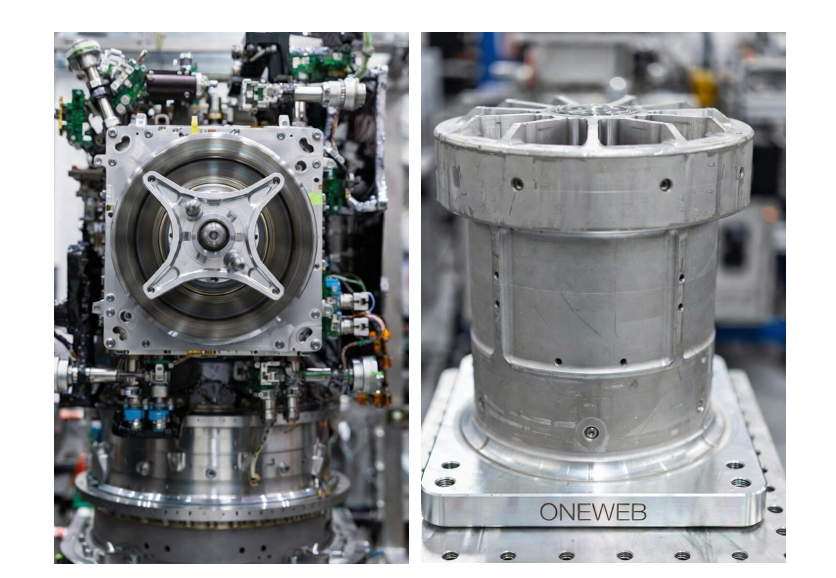 Figure 1. Reaction wheel assembly. Notice in the RWA depiction above that if the control electronics for each wheel could be incorporated into the motor hub of each reaction wheel that the assembly could be kept as compact as possible and far less cumbersome to implement in a spacecraft. The interconnections from the phase drivers and the control logic would be as short as physically possible. This, in fact was another OneWeb requirement!
 So, to recap the requirements for the power circuitry to commutate a three-phase BLDC for the OneWeb smallsat:
- Small as possible size/volume
- Lowest weight/mass possible
- Radiation-hardened
- Five-year minimum operating life
- High efficiency
- Operation from a 28 V nominal power bus
- 15 A overload/fault-handling capacity
- Operation at 100 to 200 kHz switching frequency
- Bidirectional current handling capability
- Power drivers capable of logic drive control (either 3.3 or 5 Vdc).
The previous requirements also necessitate the use of a half-bridge power driver be used for each of the three phases of the reaction wheel’s motor. And furthermore, the requirement for radiation-hardness demands that GaN HEMTs be utilized as the power switches in each half-bridge power driver, as they have superior radiation performance in a low dose, total dose and heavy ion radiation environment, such as a long-term LEO orbit. A rudimentary block diagram for a typical half-bridge power driver utilizing eGaN power switch elements is shown in Figure 2.
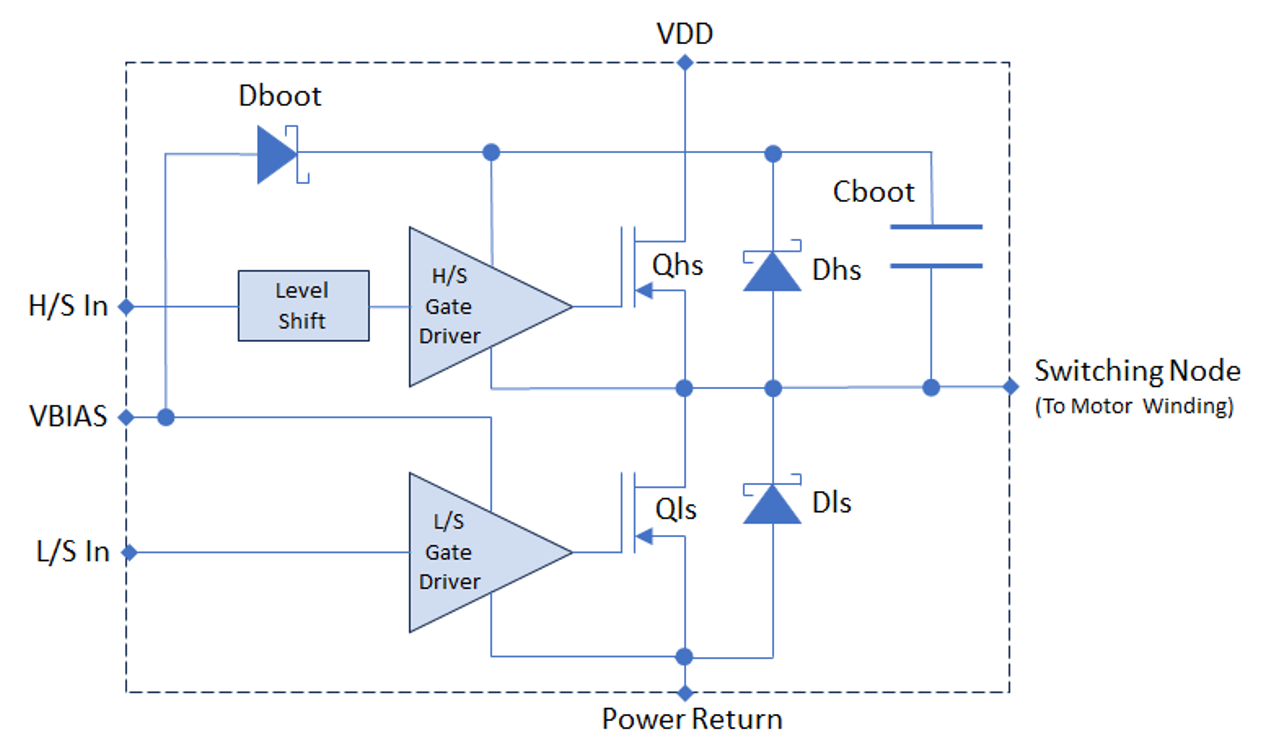 Figure 2. Rudimentary half-bridge block diagram utilizing GaN power switches.
 To aid in providing the longest life possible, some protection features for the above circuit are necessary. These include under-voltage detection and operating lockout for VBIAS potentials that are insufficient to fully enhance the output MOSFET power switches QLS and QHS and input “shoot-through” protection for the logic inputs to prevent both power switches from being enabled by logic high (“1”) states being applied to the L/S In and H/S In logic inputs. A shoot-through, or cross-conduction, event occurs when both the low- and the high-side power switches conduct simultaneously allowing extremely high, uncontrolled current to flow through the switches from VDD to the Power Return (ground). A high-level functional block diagram of the necessary power driver function is shown in Figure 3:
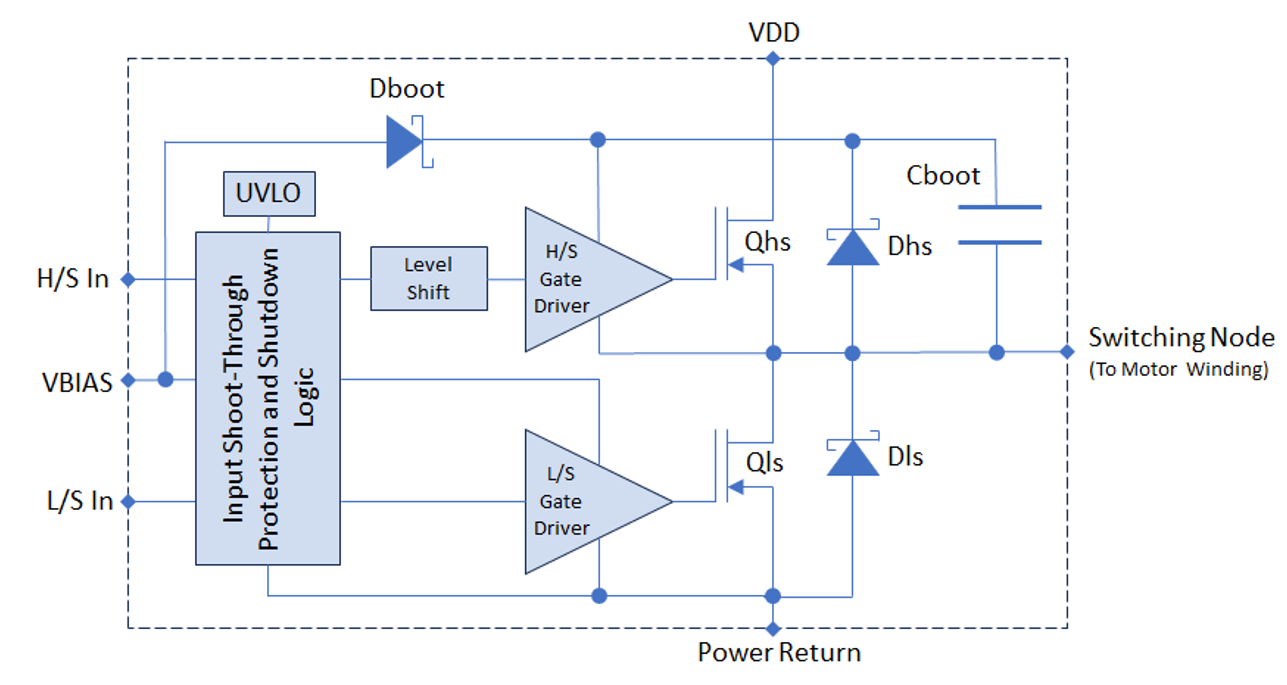 Figure 3. High-level half-bridge functional block diagram.
 It is the block diagram with some minor modifications for UVLO reporting and driver shutdown that is employed for the chosen OneWeb power driver. Figure 3 was the starting point for the detailed design and development for the final half-bridge power driver provided to OneWeb.
The EPC Space Goals: Half-Bridge Driver Development and Details
Using Figure 3 as the development starting point, the first task was to select the type and ratings of the output power switches and output Schottky diodes, and these devices were chosen given the de-ratings necessary to support the mission life, and to adhere to the NASA guidance related to the de-rating of Schottky diodes. The next-step development of the gate driver flowed from these choices.
It was also determined early-on in the design process that there were no monolithic gate drivers available for the L/S and H/S gate driver functions. A key breakthrough in the One Web circuit development was the recognition that a high-speed, high-performance gate driver could be implemented from low-power, small signal GaN HEMTs — in fact, only four HEMTs would be required for each gate driver circuit. The two greatest technical challenges in the gate driver development and design were finding devices that could provide the sufficient dynamic gate drive for the chosen power HEMTs. EPC and EPC Space developed a specific Radiation Hard HEMT for the gate driver with the specific performance and physical size required. The addition of biasing passives completed the gate driver design. Finally, the determination of the UVLO circuitry and the shoot-through protection for the circuit rounded out the electrical design. As a result, there were 58 total components required for the complete power half-bridge function shown in Figure 3.
Concurrent with the electrical design process was the determination of the packaging technique that would provide the necessary cost target and that was compliant with high-volume manufacture. Hermetic metal packaging was excluded due to cost, so EPC Space took on the development of a printed circuit board (PCB)-based packaging concept that utilized a transfer over-molding process to encapsulate the necessary components after they were attached to the PCB. The PCB capitalizes on the availability of extreme copper plating to form I/O “pillars” that allow for enhanced thermal performance from the power dissipating elements to the application PCB. To make the assembly process amenable to high volume manufacture, the PCB is processed as an array and then “singulated” using narrow-kerf saw cuts. The resultant device is 1.00 in. x 0.75 in. x 0.125 in. is burned-in, and environmental and electrical tested.
The Proof of Results
The proof of performance is in the results, and the results obtained for the half-bridge power driver can be described by the excellent electrical performance and the compactness of the resultant packaging. Figures 4a and 4b show the typical switching node performance (rise and fall times, respectively) obtained for the half-bridge driver at a VDD of 25 Vdc and a load current of 10 A when connected as a step-down power stage:
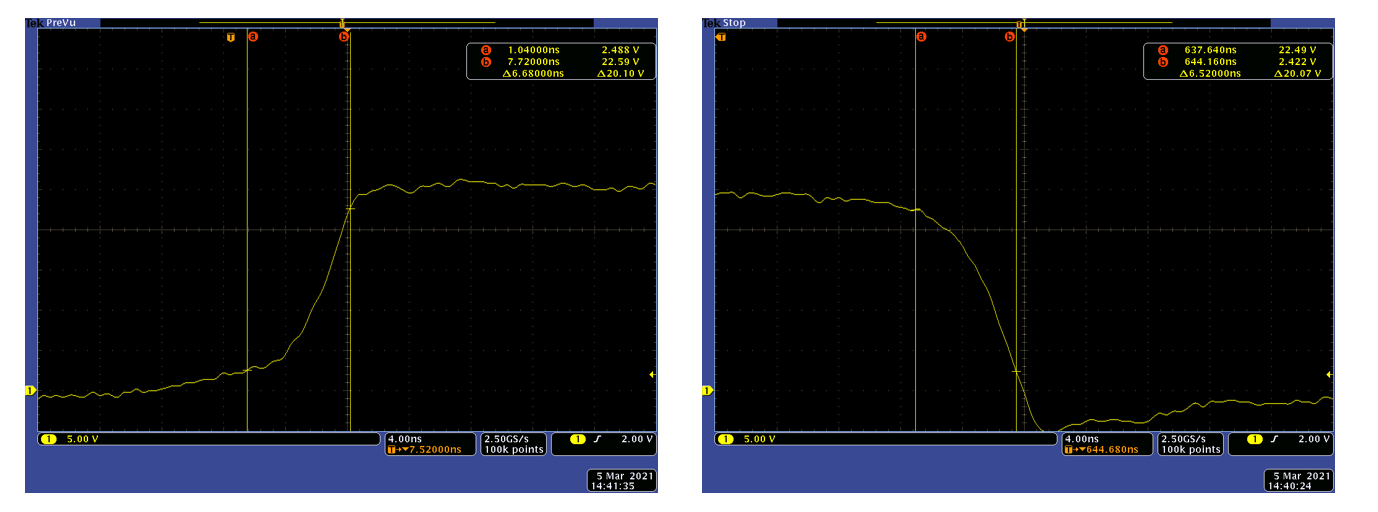 Figure 4. (a) Switching node rise time and (b) switching node fall time.
 The results speak for themselves, as the rise time is 6.7 ns and the fall time is 6.5 ns.
Figure 5 shows the typical efficiency of the OneWeb half-bridge connected as a step-down power stage for VDD = 25.0 Vdc, Vout = 5.0 Vdc, Iout = 1 to 10 Adc, switching frequencies of 200 kHz and 500 kHz and a dead time of 60 ns.
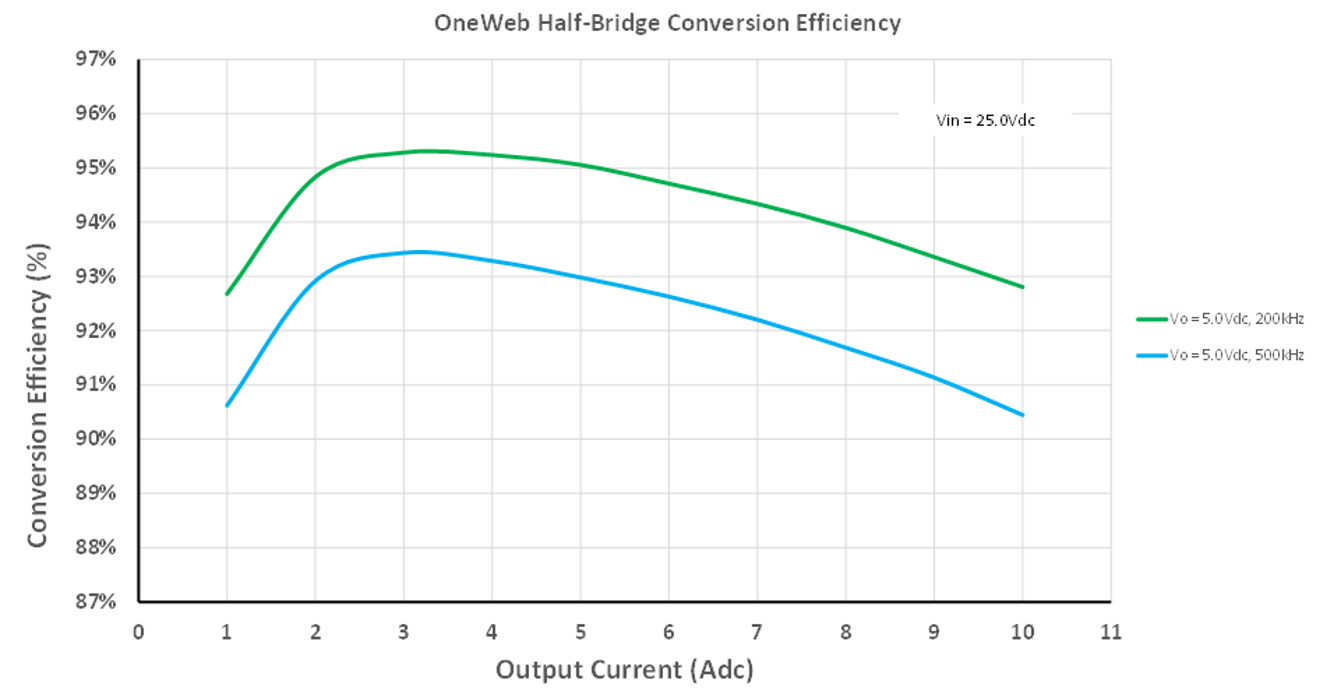 Figure 5. OneWeb half-bridge conversion efficiency performance.
 It’s obvious that the conversion efficiency of the OneWeb half-bridge remains above 90.5% over the entire 1 A to 10 A operating range. This is exceptional performance for a device that essentially is the result of electrical and mechanical trade-offs to achieve the required physical size and electrical functionality.
Finally, the I/O (bottom) side of the module package that contains the OneWeb half-bridge is shown in Figure 6 (the actual size on an 8.5 x 11 page). As was mentioned previously, it is 1.00 in. x 0.75 in. x 0.125 in. and weighs 1.79 grams.
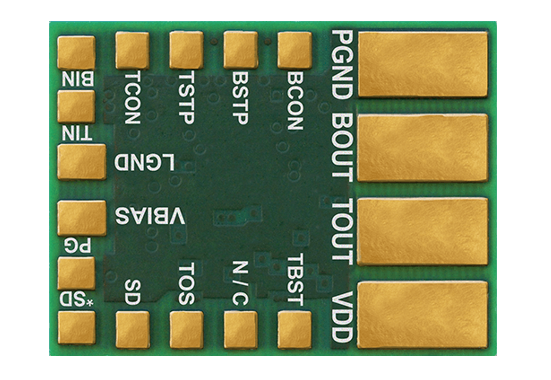 Figure 6. OneWeb half-bridge I/O pad package view.
The proof of the success of this development effort is the fact that three of the packages shown in Figure 6 ably fit into the hub of each reaction wheel in the spacecraft. There are over 10,000 of these modules on-orbit and operating as spares, having achieved and each day gaining additional flight heritage. Many are reliably operating beyond the required 5-year design lifetime.
Conclusion
In conclusion, the development of the 50V/10A half-bridge driver for Eutelsat OneWeb's reaction wheel assemblies exemplifies the power of and reliability of Rad Hard GaN FETs. By leveraging radiation-hardened GaN HEMTs and a compact, high-efficiency design, EPC Space not only met the stringent demands of size, weight, reliability, and performance but exceeded them, delivering modules that have proven their worth in the harsh environment of space. With over 10,000 units now accumulating invaluable flight heritage and many surpassing the five-year mission life, these drivers are enabling seamless global connectivity through OneWeb's constellation. This success underscores the potential of GaN-based solutions to drive the next generation of satellite systems, paving the way for more affordable, sustainable, and resilient space exploration. As the demand for high-speed internet and advanced spacecraft grows, innovations like this will continue to propel us toward a more connected future.